B2B Contact Database Tools: 2024 Buyer's Guide & Feature Comparison
95% of B2B sales teams rely on contact databases, yet 67% face data quality issues. This comprehensive buyer's guide compares top B2B contact database tools in 2024, covering essential features like data accuracy, search capabilities, and integration depth to help you choose the right platform for y

95% of B2B sales teams rely on contact databases to fuel their prospecting efforts, yet 67% report data quality issues that directly impact their conversion rates. The difference between a $50/month tool and a $500/month platform often comes down to three factors: data accuracy, search capabilities, and integration depth.
Choosing the right b2b contact database isn't just about finding emails—it's about building a prospecting engine that scales with your team. Modern platforms like Consulti's 10M+ verified contact database combine real-time verification with advanced search filters, but the market offers dozens of alternatives, each with distinct strengths and limitations.
Understanding B2B Contact Database Fundamentals
A b2b contact database serves as your prospecting foundation, providing verified contact information for decision-makers across industries. These platforms aggregate data from multiple sources: public records, social media profiles, company websites, and user-contributed information.
The core value proposition centers on three pillars: data coverage, accuracy rates, and search functionality. Coverage determines how many contacts you can access, accuracy affects deliverability rates, and search capabilities impact your ability to find the right prospects.
Most databases update their information quarterly, though premium platforms refresh data monthly or even weekly. This frequency directly correlates with data accuracy—stale information leads to bounce rates exceeding 15%, while fresh data typically maintains bounce rates below 5%.
Key Takeaway: Data freshness impacts more than deliverability. Recent studies show that contacts reached within 30 days of a job change are 3x more likely to respond to outreach.
Database size varies dramatically across providers. Entry-level tools might offer 50-100 million contacts, while enterprise platforms exceed 500 million records. However, size doesn't equal quality—a smaller, well-maintained database often outperforms larger, poorly curated alternatives.
Essential Features to Evaluate
Data Quality and Verification
Email verification stands as the most critical feature in any b2b contact database. Look for platforms that offer real-time verification, not just syntax checking. Advanced verification includes mailbox validation, domain verification, and spam trap detection.
Top-tier platforms maintain accuracy rates above 95% through multi-step verification processes. They check email deliverability, validate phone numbers against carrier databases, and cross-reference contact information across multiple sources.
Data enrichment capabilities separate good databases from great ones. The best platforms automatically append missing information—job titles, company revenue, employee count, and social media profiles—creating comprehensive prospect profiles.
Search and Filtering Capabilities
Advanced search functionality transforms raw data into targeted prospect lists. Essential filters include:
- Geographic targeting: Country, state, city, and postal code
- Company attributes: Industry, revenue range, employee count, funding status
- Role-based filters: Job titles, seniority levels, departments
- Technology stack: Software usage, CRM platforms, marketing tools
- Behavioral data: Recent funding, hiring activity, news mentions
Boolean search operators enable complex queries combining multiple criteria. For example: "(CMO OR Chief Marketing Officer) AND SaaS AND 50-500 employees AND San Francisco."
Saved searches and alerts notify you when new contacts matching your criteria enter the database. This feature proves invaluable for targeting companies experiencing growth or leadership changes.
Integration and Export Options
Seamless CRM integration eliminates manual data entry and reduces errors. Leading databases offer native integrations with Salesforce, HubSpot, Pipedrive, and other popular CRMs.
Bulk export capabilities support large-scale campaigns. Look for platforms that allow CSV exports with customizable fields, maintaining data formatting across different systems.
API access enables custom integrations and automated workflows. Development teams can build sophisticated prospecting sequences that automatically populate CRMs, trigger email campaigns, and update contact records.
Top B2B Contact Database Platforms
Enterprise-Grade Solutions
ZoomInfo dominates the enterprise market with 100+ million contacts and advanced intent data. Their platform excels in company intelligence, providing detailed firmographic data, technology usage, and buying signals. Pricing starts at $14,995 annually for basic access.
ZoomInfo's strength lies in data depth rather than breadth. They provide comprehensive company profiles including org charts, recent news, and competitive intelligence. However, their high price point limits accessibility for smaller teams.
Apollo offers 250+ million contacts with strong email verification and sequence automation. Their freemium model provides 50 contacts monthly, making it accessible for testing. Paid plans start at $49/month per user.
Apollo combines prospecting with outreach automation, enabling users to build complete sales sequences within a single platform. Their Chrome extension facilitates real-time prospecting while browsing LinkedIn or company websites.
Mid-Market Options
Outreach.io (formerly SalesLoft) provides 60+ million contacts with exceptional deliverability rates. Their focus on email accuracy results in bounce rates consistently below 3%. Pricing begins at $100/month per user.
Hunter.io specializes in email finding and verification, offering 100+ million email addresses with domain-specific search capabilities. Their pay-per-use model suits teams with variable prospecting needs. Plans start at $49/month for 1,000 searches.
Hunter's domain search feature excels at finding all available email addresses within specific companies. This capability proves valuable when targeting account-based marketing campaigns.
Pro Tip: Test multiple platforms with small campaigns before committing to annual contracts. Data quality varies significantly by industry and geographic region.
Emerging Platforms
Consulti combines 10+ million verified contacts with advanced search filters and real-time verification. Their platform emphasizes data accuracy over volume, maintaining bounce rates below 2%. Try Consulti's database free to experience their verification technology firsthand.
Cognism offers 400+ million B2B contacts with strong European coverage. Their GDPR compliance features make them attractive for companies operating in regulated markets. Pricing requires custom quotes based on usage.
Seamless.ai provides real-time contact discovery with Chrome extension integration. Their AI-powered search identifies prospects based on ideal customer profiles. Plans start at $147/month per user.
Pricing Models and Cost Analysis
Subscription vs. Pay-Per-Use
Subscription models suit teams with consistent prospecting volumes. Most platforms offer tiered pricing based on monthly contact exports or user seats. Annual commitments typically provide 20-30% discounts.
Pay-per-use models work better for sporadic prospecting or small teams. These plans charge per contact exported or email verified, providing cost control for variable usage patterns.
Hidden Costs to Consider
Setup fees often accompany enterprise contracts, ranging from $1,000-$10,000 depending on customization requirements. These fees cover data migration, integration setup, and initial training.
Overage charges apply when usage exceeds plan limits. Some platforms charge $0.10-$0.50 per additional contact, while others require plan upgrades. Review usage patterns carefully to avoid unexpected costs.
Integration costs may include CRM connector fees, API access charges, or third-party middleware subscriptions. Factor these expenses into total cost of ownership calculations.
ROI Calculation Framework
Calculate database ROI by comparing subscription costs against pipeline value generated. A typical framework includes:
- Monthly database cost: $X
- Contacts exported monthly: Y
- Email open rate: Z%
- Meeting booking rate: A%
- Close rate: B%
- Average deal value: $C
ROI = (Y × Z% × A% × B% × $C - $X) / $X
For example: 1,000 contacts × 25% open rate × 5% meeting rate × 20% close rate × $10,000 deal value = $2,500 monthly pipeline value. If database costs $200/month, ROI equals 1,150%.
Data Privacy and Compliance Considerations
GDPR and Regional Regulations
European data protection regulations require explicit consent for processing personal data. B2B databases must demonstrate legitimate interest or obtain consent before providing EU contact information.
Compliant platforms offer GDPR filtering options, excluding EU contacts unless proper consent exists. They also provide data deletion capabilities and maintain processing records as required by regulation.
California's CCPA imposes similar requirements for California residents. Databases serving US markets must accommodate opt-out requests and provide data usage transparency.
Data Source Transparency
Reputable databases disclose their data sources and collection methods. Avoid platforms that cannot explain how they acquired specific contact information—this often indicates questionable sourcing practices.
Legitimate sources include public records, company websites, social media profiles, and user-contributed information. Purchased lists or scraped data carry higher compliance risks.
Internal Data Governance
Establish clear policies for database usage within your organization. Define acceptable use cases, data retention periods, and sharing restrictions. Document these policies to demonstrate compliance during audits.
Regular data audits help identify outdated information and ensure ongoing compliance. Schedule quarterly reviews to remove inactive contacts and update consent records.
Implementation Best Practices
Team Training and Adoption
Successful database implementation requires comprehensive team training. Focus on search techniques, data interpretation, and compliance requirements rather than just basic platform navigation.
Create role-specific training modules addressing different user needs. Sales development representatives need prospecting efficiency, while account executives require account intelligence features.
Establish success metrics early: contacts exported, email deliverability rates, meeting bookings, and pipeline generated. Regular performance reviews ensure teams maximize database value.
Data Quality Maintenance
Implement systematic data hygiene practices to maintain database effectiveness. Regular verification prevents bounce rates from degrading over time.
Create feedback loops between sales and marketing teams. Sales representatives often discover outdated contact information during outreach—capture this intelligence to improve data quality.
Monitor deliverability metrics across different email providers. Gmail, Outlook, and corporate email systems have varying tolerance for bulk outreach, requiring different approaches.
Integration Strategy
Plan CRM integration carefully to avoid data duplication and formatting issues. Map database fields to CRM properties before beginning data imports.
Establish data governance rules for handling conflicts between existing CRM data and new database information. Determine which source takes precedence for different data types.
Test integrations with small data sets before full implementation. This approach identifies formatting issues and workflow problems without corrupting existing CRM data.
Measuring Success and Optimization
Key Performance Indicators
Track database effectiveness through specific metrics that correlate with revenue generation:
- Data accuracy rate: Percentage of contacts with deliverable emails
- Search efficiency: Time required to build qualified prospect lists
- Coverage rate: Percentage of target accounts with available contacts
- Response rates: Email open and reply rates by data source
- Pipeline attribution: Revenue generated from database-sourced leads
Benchmark these metrics against industry standards. B2B email open rates average 21.33%, while reply rates typically range from 1-3% for cold outreach.
Continuous Optimization
Regularly evaluate database performance against evolving business needs. Growing companies may require additional data sources or enhanced filtering capabilities.
A/B test different prospecting approaches using database segments. Compare results from various data sources, contact types, and outreach strategies to optimize performance.
Stay informed about database updates and new features. Platforms frequently add functionality that could improve your prospecting effectiveness.
Pro Tip: Create monthly database performance reports combining quantitative metrics with qualitative feedback from sales teams. This comprehensive view identifies optimization opportunities.
Making Your Final Decision
Selecting the right b2b contact database requires balancing features, cost, and team requirements. Start with a clear assessment of your prospecting volume, target markets, and integration needs.
Most platforms offer free trials or freemium tiers—use these opportunities to test data quality in your specific market segments. Pay particular attention to accuracy rates for your target industries and geographic regions.
Consider your growth trajectory when evaluating pricing models. A platform that works for 50 contacts monthly may become prohibitively expensive at 5,000 contacts monthly.
The best database is the one your team will actually use consistently. Factor user experience, training requirements, and workflow integration into your decision process.
B2B contact databases continue evolving with AI-powered search, real-time verification, and enhanced compliance features. Choose a platform with a strong development roadmap that aligns with your long-term prospecting strategy. Start Free — search 10M+ verified contacts and experience the difference quality data makes in your prospecting results.
Related Posts
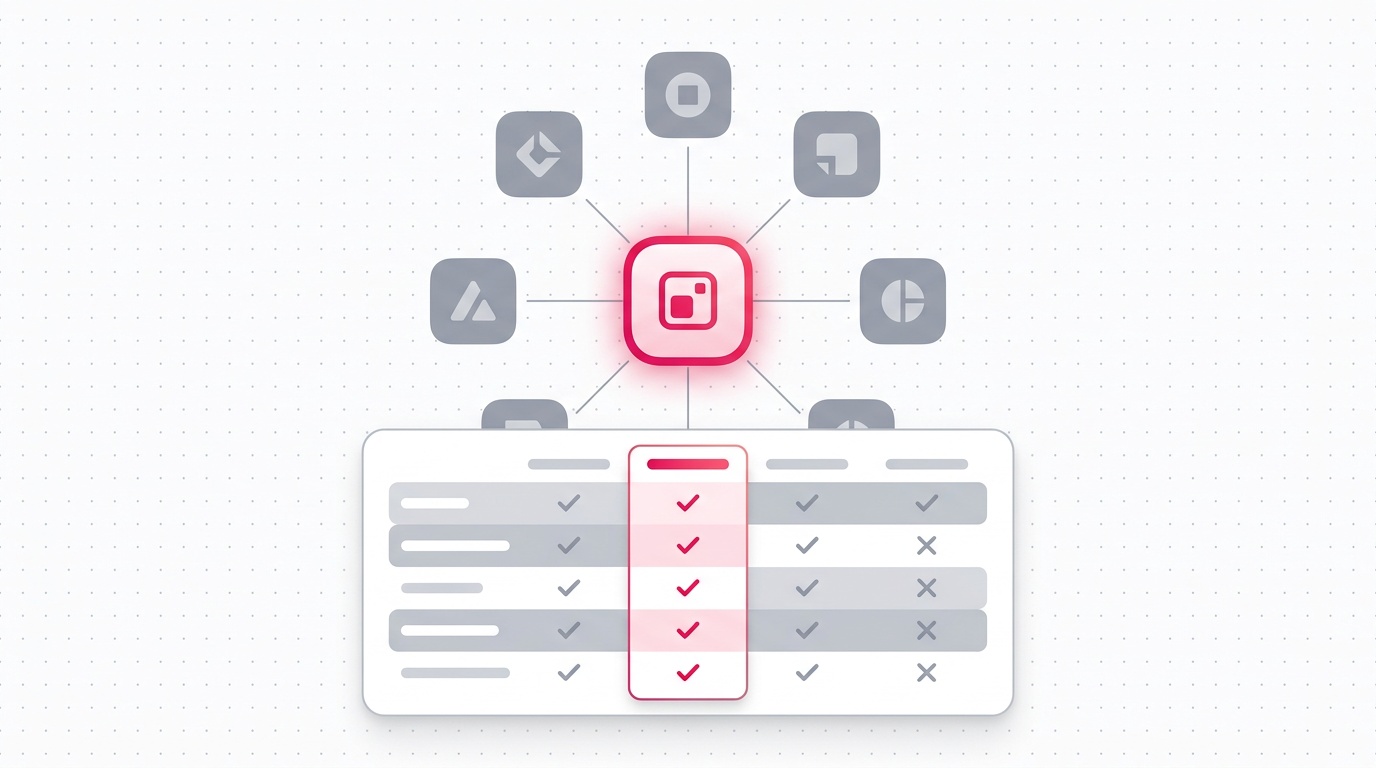
Best Apollo.io Alternatives for B2B Prospecting in 2026
Apollo.io is popular, but it's not the only game in town—and for many sales teams, it's not even the best one. After testing eight B2B prospecting platforms head-to-head, I found that tools like Consulti, ZoomInfo, Lusha, and Hunter.io each serve different use cases better than Apollo does. Here's an honest, data-backed comparison of the best apollo alternatives available in 2026, including pricing, data quality, and the specific scenarios where each tool wins.
How to Find Anyone's Business Email Address (7 Methods That Work)
Finding a business email address doesn't have to mean guessing formats or paying for an expensive tool. There are seven proven methods for finding verified business email addresses—ranging from dedicated B2B databases and LinkedIn tools to Google search operators and WHOIS records. I've used all of these in my own outreach campaigns, and I'll walk you through each method step-by-step, including when to use which approach and how to verify the address before you hit send.
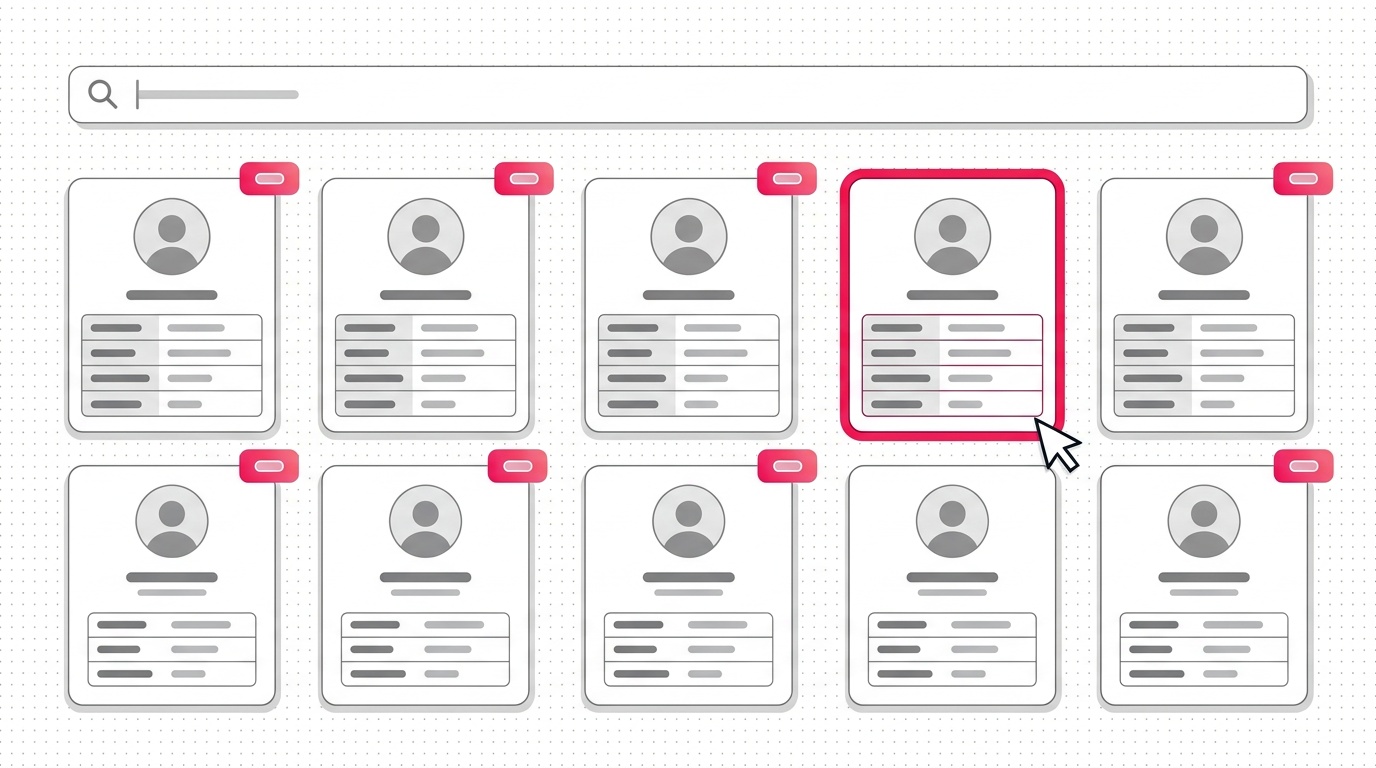
12 Best B2B Lead Generation Tools Compared (2026)
The best B2B lead generation tools give you verified contact data — names, emails, company details — so your sales team can reach decision-makers without manual research. After testing every major platform, here are the 12 tools worth considering in 2026, ranked by database quality, pricing, and real-world performance.
Ready to find your next customers?
Search 10M+ verified B2B contacts and launch cold outreach campaigns with our free email deliverability tools.