Best Apollo.io Alternatives for B2B Prospecting in 2026
Apollo.io is popular, but it's not the only game in town—and for many sales teams, it's not even the best one. After testing eight B2B prospecting platforms head-to-head, I found that tools like Consulti, ZoomInfo, Lusha, and Hunter.io each serve different use cases better than Apollo does. Here's an honest, data-backed comparison of the best apollo alternatives available in 2026, including pricing, data quality, and the specific scenarios where each tool wins.
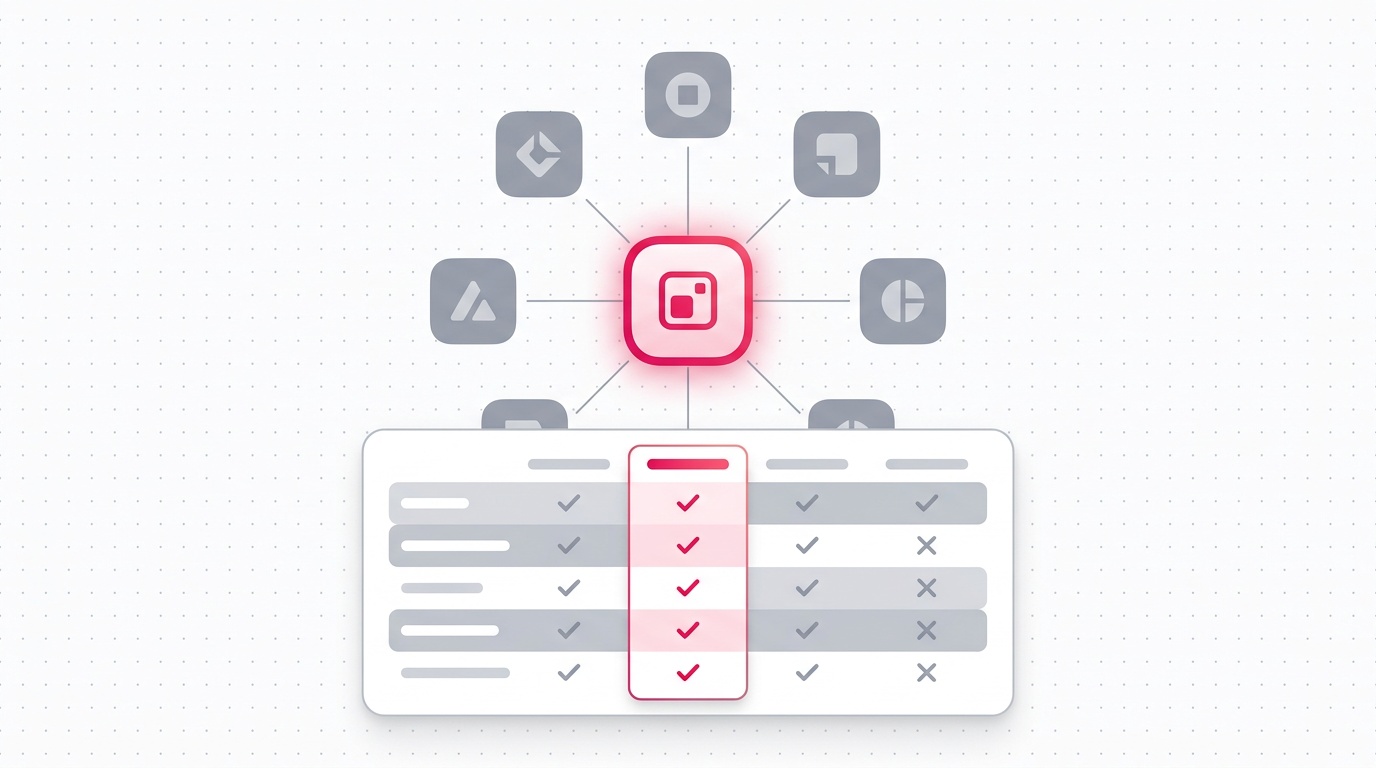
If you're searching for an apollo alternative, you already know the problem: Apollo.io's data quality has become inconsistent, pricing has crept up, and the platform tries to do too much—resulting in a tool that's mediocre at everything rather than excellent at anything.
I've spent the last two years testing B2B prospecting databases for my own outreach campaigns. Here are the eight best Apollo.io alternatives I've found, with honest assessments of where each one wins and loses.
Quick Comparison: Best Apollo.io Alternatives
| Tool | Database Size | Starting Price | Data Quality | Best For |
|---|---|---|---|---|
| Consulti | 10.4M+ contacts | Free (1,000/mo) | ★★★★★ | SMB + mid-market teams wanting verified data at low cost |
| ZoomInfo | 260M+ contacts | ~$14,995/yr | ★★★★☆ | Enterprise teams needing massive coverage |
| Lusha | 100M+ contacts | Free (5/mo) | ★★★★☆ | Individual reps + LinkedIn prospecting |
| Hunter.io | 100M+ contacts | Free (25/mo) | ★★★★☆ | Email finding + domain search |
| Snov.io | 150M+ contacts | $30/mo | ★★★☆☆ | Budget-conscious teams needing drip campaigns |
| Seamless.AI | 1.3B+ contacts | $147/mo | ★★★☆☆ | High-volume SDR teams |
| Cognism | 400M+ contacts | Custom pricing | ★★★★☆ | EMEA + GDPR-compliant prospecting |
| RocketReach | 700M+ contacts | $53/mo | ★★★☆☆ | Quick email lookups + API access |
Why Teams Are Looking for Apollo.io Alternatives
Before diving into the alternatives, it's worth understanding what's driving the exodus.
Data accuracy issues. I've run campaigns where Apollo's bounce rates hit 15-20%—which is catastrophic for domain reputation. According to Campaign Monitor's benchmarks, bounce rates above 2% are a red flag. Apollo pulls from public sources and third-party providers, and their verification pipeline hasn't kept pace with their database growth.
Pricing confusion. Apollo advertises a free plan, but meaningful usage quickly requires the $49/month basic plan. And that plan limits exports, sequences, and integrations—so most serious teams end up on the $99/month professional plan or higher. G2 reviews consistently cite pricing surprises as a top complaint.
Feature overload without depth. Apollo ships a new feature every month, but core functionality like search filters and data freshness lag behind more focused tools. As Gartner's B2B data market analysis shows, the top-rated platforms focus on data accuracy first—not feature breadth. When you need a reliable contact database, you don't need a built-in AI email writer—you need accurate data.
The 8 Best Apollo.io Alternatives
1. Consulti — Best Overall Apollo Alternative
I'm biased here—I use Consulti for my own prospecting—but the numbers speak for themselves. Consulti gives you access to 10.4M+ verified B2B contacts at a fraction of what Apollo charges.
What makes Consulti different:
Every contact in the Consulti database goes through a multi-stage verification process before it's made available. We're not just checking email syntax—we're running SMTP handshakes, checking MX records, and cross-referencing against catch-all detection. The result is consistently lower bounce rates compared to Apollo and most competitors.
Pricing:
- Free: 1,000 leads/month (no credit card required)
- Pro: $97/month — 10,000 leads/month
- Scale: $197/month — 30,000 leads/month
That's roughly $0.007 per verified contact on the Scale plan. Apollo's comparable plan runs $99/month for 10,000 credits—and those credits don't go as far because a single export can cost multiple credits.
Who should use Consulti:
- SMB and mid-market sales teams that prioritize data quality over raw volume
- Teams burned by high bounce rates from other tools
- Anyone who wants to verify leads from their own list without paying per-verify fees
Cons: Database size (10.4M) is smaller than enterprise options like ZoomInfo. If you need contacts in every niche across every geography, you may hit gaps.
2. ZoomInfo — Best for Enterprise Coverage
ZoomInfo is the 800-pound gorilla of B2B data. Their database of 260M+ contacts is genuinely impressive, and their intent data, technographics, and org chart features are unmatched.
The catch: ZoomInfo starts at roughly $14,995/year, and that's for a small team. Most enterprise deployments run $30,000-$60,000+ annually. For context, that's the same as 12+ years of Consulti's Scale plan.
Pricing: Custom (starts ~$14,995/yr for limited seats)
Who should use ZoomInfo: Enterprise sales teams (50+ reps) who need intent data, massive international coverage, and deep CRM integrations. If you're a startup or SMB, the math doesn't work.
Cons: Prohibitively expensive for most teams. Data quality complaints have grown in recent years as their database has expanded rapidly.
3. Lusha — Best for LinkedIn Prospecting
Lusha's Chrome extension is its killer feature. Install it, visit a LinkedIn profile, and you get the person's direct email and phone number instantly. For SDRs who live in LinkedIn, this workflow is hard to beat.
Pricing:
- Free: 5 contacts/month
- Pro: $49/month — 480 credits/year (roughly 40/month)
- Premium: $79/month — 960 credits/year
Who should use Lusha: Individual reps who do LinkedIn-first prospecting. The per-contact price is higher than database-style tools, but the LinkedIn integration is seamless.
Cons: Expensive at scale. 40 contacts/month on the $49 plan is a crippling limit if you're building lists for sequences. Also limited to the contacts already on LinkedIn.
4. Hunter.io — Best for Domain-Based Email Finding
Hunter.io takes a different approach: instead of a searchable contact database, they focus on finding email addresses from any domain. Type in a company URL, and Hunter surfaces every email pattern and known address associated with that domain.
Pricing:
- Free: 25 searches + 50 verifications/month
- Starter: $34/month — 500 searches/month
- Growth: $104/month — 2,000 searches/month
Who should use Hunter.io: Teams that have a list of target companies and need to find contacts within them. Also excellent as a supplement to a primary database like Consulti.
Cons: Domain-only approach means you can't filter by job title, industry, or company size the way you can with a dedicated contact database. Better as a secondary tool.
5. Snov.io — Best Budget Option with Built-In Sequences
Snov.io combines an email finder, email verifier, and drip email campaign tool in one platform. For teams on a tight budget who want to avoid paying for both a prospecting tool and an email sequencer, it's worth considering.
Pricing:
- Trial: $30/month — 1,000 credits
- Starter: $75/month — 5,000 credits
- Pro: $142/month — 20,000 credits
Who should use Snov.io: Early-stage teams that need a low-cost all-in-one tool. The data quality isn't as strong as Consulti or ZoomInfo, but the price point makes it accessible.
Cons: Deliverability issues with built-in email sequences. Data quality lags behind dedicated database tools. Better for discovery than relying on as your primary data source.
6. Seamless.AI — Best for High-Volume SDR Teams
Seamless.AI claims a 1.3 billion contact database, which sounds impressive—until you realize that most of those contacts aren't verified. The tool uses AI to find and aggregate contact information in real time, which means freshness can be better than static databases, but accuracy varies widely.
Pricing: $147/month for the basic plan (annual commitment required for best pricing)
Who should use Seamless.AI: High-volume outreach teams that accept higher bounce rates in exchange for volume. The real-time lookup approach can surface contacts not found in other databases.
Cons: Mixed accuracy. Many users report significant bounce rates. Customer service reviews are polarized. The "1.3B contacts" number is misleading—raw records don't equal verified contacts.
7. Cognism — Best for EMEA Prospecting
If you're prospecting in Europe, the UK, or APAC, Cognism stands out. They're one of the few B2B data providers that takes GDPR compliance seriously—not just paying lip service to it. Their Diamond Data verified mobile numbers are excellent for phone-based prospecting.
Pricing: Custom (no public pricing). Most teams report $15,000-$45,000/year.
Who should use Cognism: B2B teams with significant European pipeline who need GDPR-compliant data with verified direct dials.
Cons: Expensive, no self-serve pricing. Limited utility for North America-focused teams compared to ZoomInfo or Consulti.
8. RocketReach — Best for API Access
RocketReach indexes contact data from across the web and provides a clean API for developers who want to embed contact lookup into their own tools or workflows. The API documentation is solid, and the lookup accuracy is reasonable.
Pricing:
- Essentials: $53/month — 1,500 lookups/year
- Pro: $179/month — 3,600 lookups/year
- Ultimate: $359/month — 10,000 lookups/year
Who should use RocketReach: Developers building prospecting tools or CRM enrichment workflows who need API access. Also useful for individual contributors doing manual prospecting.
Cons: Per-lookup pricing gets expensive at volume. The web interface is less polished than purpose-built prospecting tools.
What to Look For in an Apollo Alternative
After testing eight platforms, I've distilled the evaluation criteria that actually matter:
1. Verified email accuracy (the most important factor)
The metric that matters is bounce rate, not database size. A tool with 10 million verified contacts is more valuable than one with 270 million unverified records. Before committing to any platform, ask for a sample data export and run it through an independent verifier. Anything above a 3-5% hard bounce rate on a fresh sample is a red flag.
2. Search filter depth
Can you filter by job title seniority? By specific technologies used (technographics)? By revenue range? By employee count? By industry sub-vertical? The more granular your filters, the more targeted your lists—and targeted lists outperform broad lists every time.
3. Total cost per verified contact
Do the math across plans. Divide the plan price by the monthly contact allowance. On Consulti's Scale plan, that's $197 / 30,000 = $0.0066 per contact. On ZoomInfo, even a conservative estimate puts you at $1.00+ per contact by the time you factor in seat limits and credit restrictions. Cost per contact matters more than sticker price.
4. Export flexibility
Can you export to CSV with all fields? Can you push directly to Salesforce, HubSpot, or Outreach? Some tools charge additional credits for exports on top of lookups—read the fine print before signing.
5. Data freshness
How often is the database updated? Apollo and some competitors are known for stale data—contacts who left a company two years ago but still show up in searches. Look for tools that timestamp their data and let you filter by "last verified" date.
6. Free trial quality
A generous free tier tells you a lot about a company's confidence in their product. Consulti's 1,000 free leads per month is a real test—not a 10-contact demo. Be suspicious of tools that require a sales call before you can evaluate the actual data.
How to Choose the Right Apollo Alternative
Here's my honest framework for choosing:
Choose Consulti if: You want the best data quality per dollar, your team is under 50 reps, and you're focused on North American B2B contacts. The free plan is genuinely useful—not a crippled demo.
Choose ZoomInfo if: You're an enterprise company with a significant sales enablement budget, you need intent data and technographics, and headcount (not per-contact cost) is your constraint.
Choose Lusha if: Your reps prospect primarily through LinkedIn and you want a seamless Chrome extension workflow. Accept the higher per-contact cost as the price of convenience.
Choose Hunter.io if: You already have target company lists and just need to find the right person and email address within those companies.
Choose Cognism if: Europe is your primary market and GDPR compliance is non-negotiable.
The Bottom Line on Apollo Alternatives
I've been building lead lists for over five years, and the clearest lesson I've learned is this: data quality beats data volume, every time. A list of 1,000 verified contacts will outperform a list of 10,000 unverified ones—both in deliverability and in the quality of conversations you start.
That's why Consulti is my top recommendation. The 10.4M contact database is more than enough for most B2B prospecting use cases, the verification is rigorous, and the free tier lets you test it without any risk.
But the best apollo alternative is ultimately the one that fits your team's workflow. If you prospect through LinkedIn, Lusha wins. If you're an enterprise, ZoomInfo has no real competitor on breadth.
Start with what fits your current volume and budget, then layer in secondary tools as your program matures.
Try Consulti free — 1,000 verified contacts, no credit card required →
Frequently Asked Questions
Is Apollo.io worth the money?
For some teams, yes—Apollo's combination of data, sequences, and analytics is convenient if you want everything in one place. But if you care about data quality above all, you'll likely find better bounce rates with a more focused tool like Consulti. Apollo is best for teams that want a single platform and are willing to accept moderate data quality.
What is the best free alternative to Apollo.io?
Consulti's free plan gives you 1,000 leads per month—no credit card required. That's significantly more useful than Apollo's free tier, which limits exports heavily. Hunter.io and Lusha also have free plans, but their monthly allowances are much lower (25 and 5, respectively).
How does Consulti's data quality compare to Apollo?
In my own campaigns, contacts from Consulti consistently deliver lower bounce rates than Apollo data. Consulti runs multi-stage email verification (SMTP handshakes, MX record checks, catch-all detection) before adding contacts to the database. Apollo aggregates from multiple sources with less rigorous verification.
Is ZoomInfo better than Apollo.io?
ZoomInfo's data coverage is broader—260M+ contacts vs. Apollo's 270M—and their intent data and technographic features are more mature. But ZoomInfo's pricing ($15K+/year) is prohibitive for most teams. For companies that can justify the cost, ZoomInfo wins on features. For everyone else, the math doesn't work.
Can I use multiple prospecting tools together?
Yes, and many high-performing sales teams do. A common setup is using Consulti for your primary database search and list building, then using Hunter.io to fill gaps for specific domains where you need contact discovery. Layer in a verification step before any major campaign send.
Related reading: 12 Best B2B Lead Generation Tools Compared
Related Posts

B2B Contact Database Tools: 2024 Buyer's Guide & Feature Comparison
95% of B2B sales teams rely on contact databases, yet 67% face data quality issues. This comprehensive buyer's guide compares top B2B contact database tools in 2024, covering essential features like data accuracy, search capabilities, and integration depth to help you choose the right platform for y

How to Build a High-Converting B2B Prospecting List in 2024
Discover how to build strategic B2B prospecting lists that drive real pipeline results. Learn ICP definition, company research tactics, and targeting strategies that increase reply rates by 30-50% while cutting sales cycles.

7 ZoomInfo Alternatives That Cost Less and Deliver Better B2B Data
ZoomInfo charges $14,995+ annually while 67% of users report data accuracy issues. Explore 7 superior alternatives offering verified contact data, better pricing, and features ZoomInfo lacks - including platforms that cost 70% less with higher accuracy rates.
Ready to find your next customers?
Search 10M+ verified B2B contacts and launch cold outreach campaigns with our free email deliverability tools.